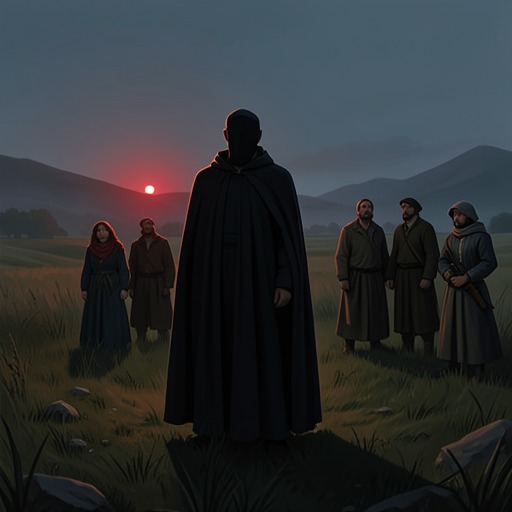
Wights
A Clash of KingsWights are corpses that rise again after death, and their existence is the clearest evidence that the threat beyond the Wall is not merely human, natural, or historical. They are physically marked by pallor, extreme cold, black hands and feet, wounds that do not bleed, and blue eyes shining with an inhuman light. Yet they are not empty automata: they may remember enough of their former lives to use familiar knowledge, while whatever made them human has been stripped away. That combination of recognizable bodies and transformed purpose makes them both bodily abominations and a direct challenge to the Night’s Watch’s understanding of death.
Evidence of the Dead Returning
The Night’s Watch discovers two of Benjen Stark’s missing rangers in the woods. The men are already dead when found, but their corpses rise during the night after being brought back to Castle Black. One kills Ser Jaremy Rykker; the other attacks Lord Commander Jeor Mormont. The event is remembered by Jon Snow through the image of Othor, whose burnt fingers twitch and whose dead body bears burning blue eyes and cold black hands. The memory is sufficiently vivid to return in Jon’s dreams, making the wights not only an external menace but also a continuing psychological presence.
The physical evidence is difficult to dismiss when seen directly. A severed hand, torn from one of the dead men by Jon Snow’s wolf, remains pale and grotesquely active, twitching and stirring inside a jar as if still alive. Later, when Jon remembers confronting it, the hand climbs his leg and continues writhing after he pries it away with his longsword, opening and closing its fingers while the corpse rises behind him. The dead man’s belly hangs open in ropes of torn flesh, yet no blood flows from the wound. The ordinary signs by which a body is recognized as dead therefore coexist with movement that denies death’s finality.
Nature and Capabilities
Jeor Mormont describes the recovered rangers as pale and cold, with black hands and black feet and wounds that did not bleed. Their violence is not simply the reflex of a corpse. Mormont concludes that they remember some of what they knew when alive, because one of them retains enough familiarity with the Night’s Watch to attack a known place and person. The memory is partial and distorted: the body carries traces of its former identity, but “there was no human mercy left in them.” A wight is consequently neither an ordinary corpse nor a living person returned intact. It is a human form animated after death and emptied of compassion.
The blue eyes reported by the women at Craster’s Keep sharpen this distinction. When Jon Snow asks what color the eyes are, he is told that they are blue, as bright as blue stars and as cold. The image joins visual brilliance to the absence of warmth, turning the eyes into a recurring sign of a consciousness or force that is present without being human. The wights’ defining horror lies partly in this contradiction: they can be seen, recognized, and even linked to specific dead men, but their recognizable appearance offers no protection against their altered nature.
Rumor, Denial, and Political Consequences
At Craster’s Keep, the evidence of the wights is met by denial. Craster claims that no trouble has come from the dead and insists that the gods protect him, while Jeor Mormont reports that abandoned villages, vanished animals, and the murdered rangers point to a wider disaster. The wights thus appear within a landscape already emptied of ordinary life. Their presence is not isolated terror but part of a pattern of disappearance that the Night’s Watch can observe without yet explaining.
The same warning is carried south by Ser Alliser Thorne, who tells the court that two dead rangers rose again at the Wall, that one killed Ser Jaremy Rykker, and that the other tried to murder Jeor Mormont. Tyrion Lannister initially faces the report amid sniggering and political suspicion. Ser Alliser has brought a hand as proof, but the grisly token rots away while he waits to be heard, leaving only bones. The failure of the evidence to survive its journey allows the court to treat the warning as absurd, even though Tyrion remembers standing beside Jon Snow and a great white wolf atop the Wall and feeling dread in the darkness beyond it. The wights therefore expose a dangerous gap between reality and political credibility: the Night’s Watch encounters a material threat, while the kingdom receives only a deteriorating relic and a story that sounds impossible.
Narrative Significance
Wights make death unstable. The Night’s Watch’s dead do not remain safely in the past; they return into the same forts and against the same comrades who knew them alive. Their bodies preserve enough identity to make recognition unavoidable, but their actions convert recognition into danger. The remembered hand in its jar is especially potent because it is at once an object, a fragment of a person, and an active assailant. Its movement makes material remains suddenly impossible to treat as passive evidence.
The wights also turn fear into a test of conduct rather than a mark of cowardice. Jon Snow tells Samwell Tarly that everyone is afraid and that shame lies not in fear itself but in how one faces it. This principle is grounded in the wights’ demonstrated reality: the danger is too concrete to be dismissed by courage, yet courage remains necessary because the dead can rise inside the Night’s Watch’s own stronghold. Against the blue-eyed dead, the vows and institutions of the Watch are forced to confront a power that the wider realm prefers not to believe exists.